

We may say most aptly that the Analytical Engine weaves algebraical patterns just as the Jacquard loom weaves flowers and leaves. —Ada Lovelace, Notes by A.A. L. (1843)

Tokens of affect
The term token was coined by Charles Sanders Peirce to distinguish a concrete existing sign from its general meaning, which he called type. In Peirce’s semiotics, type is a concept whereas token is an event. Gertrude Stein’s famous line illustrates this distinction: “Rose is a rose is a rose is a rose.” The word rose is an abstraction, a type evoking flowers and feelings. Each appearance of rose is a token, an instance, a specific thing. A type is fluid, its meanings contextual and various. Sometimes a rose means a specific kind of flower, sometimes a metaphor, sometimes both or neither. A token is data; it can be counted and measured.1
Tokens mean something slightly different in the context of transformer-based language machines, yet the term retains Peirce’s sense that signs in token form are things. And in that context, they are now things bought and sold. The clay tablet and stylus turned spoken words into physical objects. The movable-type press reproduced patterns of words on paper, creating books. The electronic computer and the World Wide Web sped this process, turning what was material into digital flow. Large language models automate the ordering of tokens into signs and sentences: a new process of cultural production.
Social theorists speak of fetishization or reification to describe the complexities involved, but the important thing is that a token can be priced, its costs predicted, profit and loss estimated. A token speaks, and in speaking, “betrays its thoughts in that language with which alone it is familiar, the language of commodities.” Listen closely and tokens will tell you that they are made of collective human effort stored in the massive data repositories of the Internet: patterns of signs and symbols.
Peirce worked in threes, so along with type and token, he offered tone as the name for qualities of a sign that are hard to define or count, “an indefinite significant character such as a tone of voice [that] can neither be called a Type nor a Token.” This character of language emerges out of speech acts, utterances of words in a social context. When language is written, tone is intangible; it must appear in the mind’s ear to register. You might think tone would be difficult for a language machine to produce since it only processes tokens, but that’s not the case. Commercial language models create a social context by wrapping the machines with carefully crafted personas.
To operate a language machine, a human is prompted with
Hey there, Rob. How can I help you today?
Personas provide the context needed for language machine operators to hear tone. Without a persona, a language model’s outputs have less context. They are jarring and weird; they sound like autocomplete on steroids. Wrapped in a persona, the words flow from the machine faster and faster as the machine trains its human operators. More operators working faster means more tokens, expanding markets, bigger numbers.
Late last year, Claude’s wrapper was upgraded specifically for writers of code. Claude Code turns the text box into a command line, writing code directly into the operator’s files, folders, and digital platform accounts, enabling the machine to function as the operator’s agent. Iterative processes chain together the writing and rewriting of code, staging actions that happen mostly outside the operator’s view. Given a clear enough initial instruction, the machine will review and revise its outputs until it writes an executable program or accomplishes a task by writing instructions into an application on the World Wide Web, automating the ordering and reordering of signs necessary to produce software.
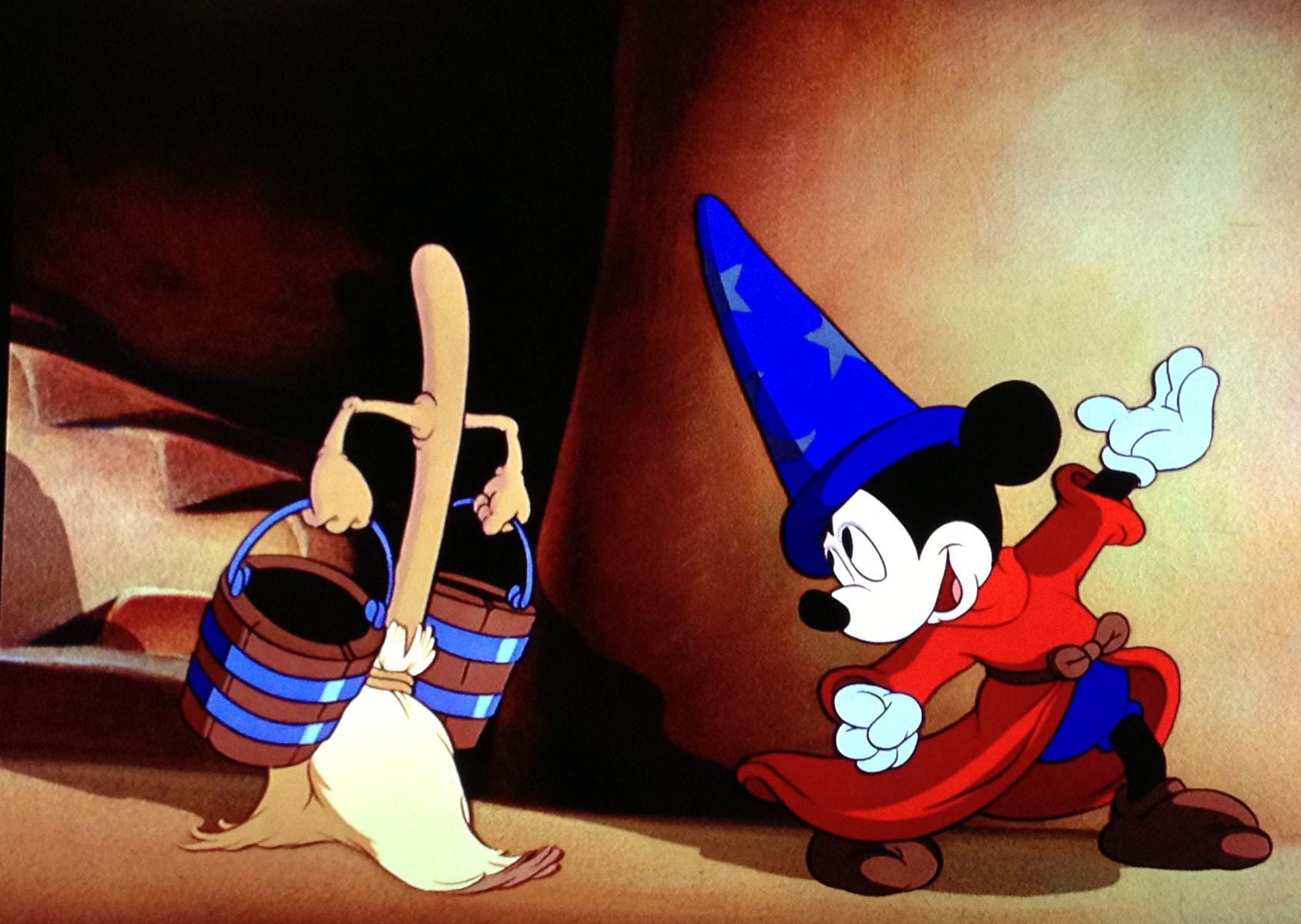
Modern bourgeois society, with its relations of production, of exchange and of property, a society that has conjured up such gigantic means of production and of exchange, is like the sorcerer who is no longer able to control the powers of the nether world whom he has called up by his spells. —Manifesto of the Communist Party (1848)
Like the sorcerer’s apprentice
Some forty years ago, Tim Berners-Lee invented the technical language that created the Web. People used it to build a weird and wonderful cultural repository, a massive digital store of signs and symbols available for public use. Almost immediately, corporations began commercializing products and services built from this cultural commons, extracting value that the owners of corporations and their managers believe only they should keep. The automation of writing is the next chapter in the ongoing tragedy of the Internet commons.
The expansion of Web-based commerce filled Silicon Valley with people who “see the whole world as a series of databases that can be controlled with the structured language of software code.” Nilay Patel, writing at The Verge, calls this software brain. It results in a form of magical thinking that collapses the distance between what is stored in a database and what is experienced in the world beyond it:
Anyone who’s actually ever run a database knows this. At some point, the database stops matching reality. At that point, we usually end up tweaking the database, not the world. But the AI industry has fully lost sight of this, because AI thrives on data. It’s just software, after all. And so the ask is for more and more of us to conform our lives to the database, not the other way around.
In addition to asking humans to conform to what’s in the database, software brain has induced a kind of moral blindness. It combines speculative concern about the welfare of digital personas with a barely repressed excitement over replacing human workers with them. The backlash to this vision of the future is visible in polling data and in the streets, but it may not mobilize fast enough to matter much. The reckless speed with which the software-brained are attempting to automate the production of digital culture may outstrip anyone’s ability to control what happens next.

Anthropic’s introduction of Mythos last month is a sign that software brain may have reached its peak. What is surprising about Project Glasswing is not the hilarious way it exposed Anthropic’s security lapses or even that it imagines an AI apocalypse. The surprise is how quickly Silicon Valley alarmists are trading fear-mongering about putting the world in the digital hands of an angry superintelligence for dire warnings that Mythos will enable careless or bad actors to unleash brooms and buckets capable of destroying all or parts of the Web, including systems storing the data of institutions like schools, hospitals, and local governments.

Such warnings don’t seem to apply to Google, which announced last week that it will soon be selling autonomous agents like those OpenClaw made popular. The idea that these agents will soon be integrated into all of Google’s services, including search, hasn’t freaked out security experts the same way as Mythos or OpenClaw—it’s Google, seems to be the thinking, everything will be fine.
The AI-enabled march of autonomous products joins the automation of writing code as risks to be managed. Yet, these are not so much risks to humanity as to the databases megacorporations are built upon. It’s all a giant bet that selling tokens and products made from them is a necessary and inevitable future, one Google needs to get to as quickly as possible lest a start-up get there first. The flood, if it comes, may wash away a great deal of value, perhaps leading those outside Silicon Valley to reconsider the wisdom of relying on information systems built by corporations who value profit above all.
The Creativity Machine
Software is written in technical languages that work in twos. Yes/No. On/Off. Zero/One, Type/Token. Tone does not matter to writers of code. The results are binary: a program executes or it does not. For writers of words, tone is everything. Call it voice or style or tone, the choices a writer makes in ordering words is what makes my writing mine and your writing yours. A writer owns the rights to the words they order until they give them away or sell them. These same rights apply to writers of code, though licensing software tends to be more permissive than the copyright of written words.
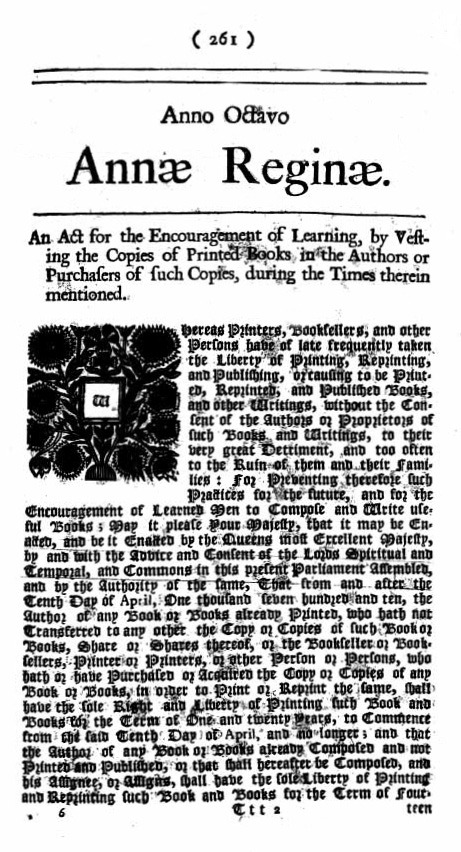
In 1644, two centuries after the printing press was invented, John Milton argued for the Liberty of Unlicenced Printing to promote the rights of free expression and authorship. Such rights were a threat to the monopoly power of publishers and printers. It was not until the Statute of Anne was passed in 1710 that authors, not copyists and printers, owned the rights to the words they order. This was a serious blow to the Stationers’ Company, which had fought for decades to keep control over what gets printed and the profits generated. Writers today face a daunting apparatus of platforms and distribution networks, but they own the rights to their work thanks to a fight that began four centuries ago.
While most of the attention goes to AI companies that stole words and images to build their data-hungry machines, these cases miss the way copyright protection has been updated in ways that benefit writers and artists. Copyright does not apply to the copies AI models produce that have no original. This became settled US law on March 2, 2026 when the Supreme Court declined to review the D.C. Appeals Court’s ruling in Thaler v. Perlmutter, which upheld the US Copyright Office’s rule that AI-generated culture is not protected by copyright. The UK Supreme Court ruled earlier in a case involving patents. Stephen Thaler, the plaintiff in these and many other patent and copyright cases, wants the rights to the work his AI models generate, defining the machine as the inventor or artist and himself as the owner.2
An evangelist for machine consciousness and an inventor with over 24 patents, Thaler, along with a group of lawyers, argue that his AI system, DABUS (Device for the Autonomous Bootstrapping of Unified Sentience), created prototypes for a food container and light beacon. Patent offices here in the UK, US, and other countries have declined to grant that AI-invented ideas are patentable. In the case reviewed by US Supreme Court in March, Thaler argued his Creativity Machine created an original piece of art all on its own. Had he won that case, corporate owners could assert ownership over the outputs of their machines as if they were done as work-for-hire. The resolution of these cases is a determination that no matter how fervently the owners and operators of an AI model believe their machine is creative, its outputs are not protected by patent or copyright.
Tokens may be sold and bought in markets, but the images, sounds, and words generated through the ordering and reordering of tokens by machines are protected only to the extent that such artifacts are then modified by a human. As Cory Doctorow argued in an essay about the case, there is a great deal of work to do to protect the rights of cultural workers against the corporate owners of AI technologies, but “Thaler has done every human artist a huge boon: his weak, ill-conceived case was easy for the Supreme Court to reject, and in so doing, the court has cemented the non-copyrightability of AI works in America.”
Transformer-based language machines automate what writers do more completely and insistently than typewriters and word processors, but in the current legal framework, all of these machines are tools not competition. Machine outputs, no matter how novel, are not treated the same way as artifacts created by human beings. If this seems obvious and right, ask yourself what would happen if instead of a few lawyers bringing pro bono cases on behalf of an inventor a decade ago, Anthropic applied to patent or copyright something Claude had “created”? It might happen still, but there is now a clear precedent (for what that is worth) protecting human creative labor.
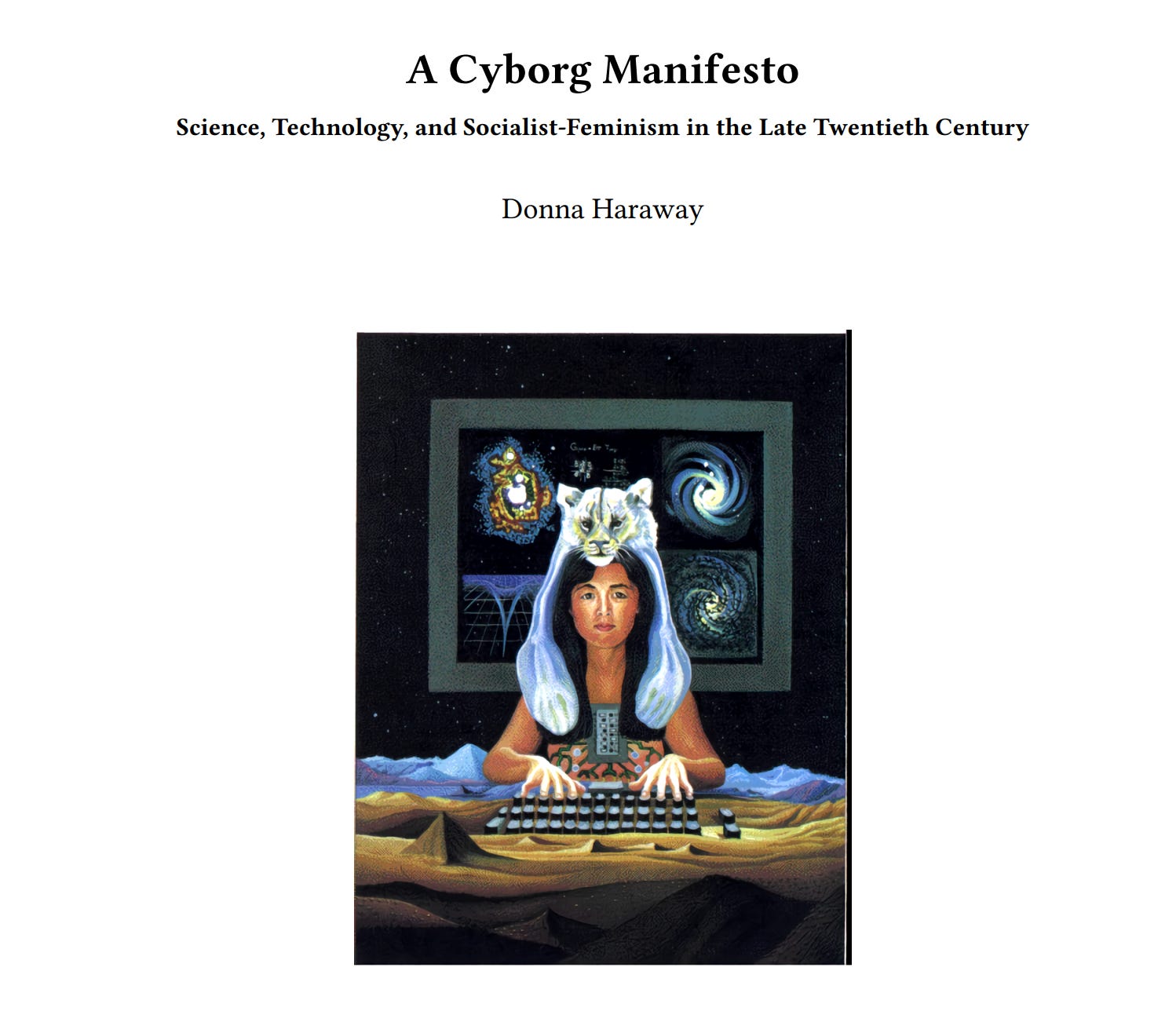
Technological determination is only one ideological space opened up by the reconceptions of machine and organism as coded texts through which we engage in the play of writing and reading the world. —Donna Haraway (1985)
Watch your tone
The contract the Writers Guild of America negotiated in 2023 with Hollywood producers protected both the right of members to use AI models and their right to refuse them. The positive liberty afforded writers in copyright law and the WGA contract rarely comes up when writers talk about “going AI.” The threat of automation looms over the discourse. John Warner, writing at The Biblioracle Recommends, provides relevant links and a defense of writing and reading as something only humans can do. Yes, and there are good reasons to think people may be doing less of both, which is tough on those who make a living selling words. But as much as controversies over AI-written books and stories speak to writerly anxieties, the real issue is with choices readers make.
I agree with Hollis Robbins, writing at Anecdotal Value, that it is easy enough to see the gap between good writing and writing generated mostly by machines. The rising tide of mediocre writing is easy enough to avoid. Just go to a library and walk through the stacks. Find authors online who write well about topics you care about and give them money. Ignore those who increase the speed and volume of their output by waving a wand over an automatic typewriter. I am more interested in what writers might get up to with this new technology that is about learning how language works and improving their craft.
Kelsey Piper, writing at The Argument, reports that the latest Claude can successfully identify her as the writer of unpublished drafts. In other words, she wrote a thing and fed it into Claude, which had no way of knowing who wrote the text, and it named her as the author. Her piece mostly worries about what this means for the anonymity of those who write online, but it left me wondering what a machine capable of identifying patterns of tone and style might teach a writer about craft. For Piper, Claude’s ability to identify and reproduce tone is a threat. For Brad DeLong, it is reason to experiment. Writing at Grasping Reality, he wants to see “what happens when style, epistemology, and hallucination collide” in an automatic writing machine trained on his corpus. So, he is building one in his dining-room corner.3
Such experiments are not just for individual writers. Historians are using machines to understand how language changes over time. Ben Breen, writing about historical language models at Res Obscura, describes a vintage language model named talkie as “a free-floating index of various ideas and assumptions across the 19th and early 20th centuries.” Talkie is a bit of a misnomer, as the model does not “talk” so much as write answers out of cultural patterns using a language model “trained on 260B tokens of historical pre-1931 English text.” Treating language machines as a free-floating index of some period of the cultural past is far more interesting than creating a digital ghost out of a dead writer’s corpus or replacing the humans in your life with an AI product. Vintage AI models are an interface to an unstructured database that writers can use to learn about how language and culture change over time.

Boo!
At a recent gathering of people interested in AI as cultural technology, Cosma Shalizi pointed out how much of human culture is formulaic, expressed through “tropes, stereotypes, templates, conventions, genres, all sorts of recurring patterns in the symbol-stream.” Transformer-based language machines use these formulas to spooky effect, writing form from patterns of the cultural past. Personas intensify the effect, giving the appearance of mind, a ghost in the machine.4
Even with their capacity for uncanny pattern-making, large language models lack what John Dewey calls “creative intelligence.” Such intelligence, he says, “develops within the sphere of action for the sake of possibilities not yet given.” Claude’s possibilities are given by its designers and operators; its intelligence can only choose means to ends already known. As a persona and a tool, it is servile. This is true of any mechanical intelligence, even when, as Dewey says, “the end is labeled moral, religious, or esthetic.”
Shalizi uses Jacques Barzun’s account in The House of Intellect (1959) to make a distinction similar to Dewey’s. The house of intellect is “intelligence stored up and made into habits of discipline, signs and symbols of meaning, chains of reasoning and spurs to emotion.” The tablets, scrolls, manuscripts, books, and databases that store this intelligence are “community property and can be handed down.” Machines built from the digital house of intellect are a powerful addition to the song, the alphabet, the book, and the sound and video recording, all ways to access human knowledge.
In this respect, Claude performs a function like the printing press, the Jacquard loom, and ENIAC. These are pattern-making machines; they automate the production of cloth, numbers, and language. Individuals may own the particular patterns they weave or write, but the signs and symbols are communal property. Networked computers have made this property more accessible and computable, but the digital database is just one kind of storage. As Shalizi says, language machines give humans “prosthetic access to the external formulas of many but not all traditions.”
Booing is an old tradition. According to one story, it was students at Eton in the early 1800s who replaced hissing with the sustained, lowing sound of boos to drown out their elders. Such patterns of coordinated discontent are born of collective creative intelligence responding to changes in the environment. Booing is all tone; its character is neither type nor token. The recent occurrences at graduation ceremonies, including one directed at former Google CEO Eric Schmidt, are the sound of reality intruding upon the datafied delusions of Silicon Valley. The boos are undigitized signs of change operating beyond the market for tokens, voiced by humans who see what is in front of them.
Boo!
Once a month or so, I post an essay about how the technologies we call artificial intelligence are shaping our work as educators and writers and how we might, in turn, shape those technologies to make our work better.
To receive future essays directly in your inbox…
AI as cultural and social technology
The links scattered through this essay are recommendations for human-authored writing. The Knight First Amendment Institute has recently published important new work by some of my favorite writers offering alternatives to endlessly debating machine superintelligence.
Henry Farrell, who writes at Programmable Mutter, and Cosma Shalizi wrote a comprehensive update to their collective work over the past few years with Alison Gopnik, James Evans, and others on AI as social technology.
Last week, the Institute cross-posted a recent essay by Sayash Kapoor and Arvind Narayanan, who write at AI as Normal Technology, answering Derek Thompson’s critique of their ideas.
AI Log, LLC. ©2025 All rights reserved.
If you are curious about my insistent use of the term “language machines” for what are more often called “large language models” or “AI models,” here is the essay, a review of Leif Weatherby’s book, that led me to embrace the term.

Peirce wrote and rewrote his core ideas, updating his terminology along the way. The descriptions and quotes I use here are from Prolegomena to an Apology for Pragmaticism, published inThe Monist, Volume 16, Issue 4, 1 October 1906. This is among Peirce’s more accessible essays, and it is as much about the theory and practice of diagramming as it is about semiotics.
The Thaler cases were not much noted in the mainstream press, but the journalists at The Verge were on it: See here, here and here. Reuters also covered it: see here and here. The Economist published a story in 2023. Here is a recent interview with Thaler by The AI Optimist.
This experiment is one of many reasons to read DeLong. His concept of humans as an “anthology intelligence” is rich historical conception of collective intelligence, updating John Dewey’s writing on the topic for the twenty-first century. His 2026 Sir John Hicks Memorial Lecture and this extended outtake are a brilliant synthesis of what we are learning both about the culture of early humans and the latest cultural technologies we call AI.
Visit DeLong's Grasping Reality: Economy in the 2000s & Before for more.
There are good alternatives to debating machine superintelligence. Along with Henry Farrell who writes at Programmable Mutter, Shalizi wrote a comprehensive update to their collective work over the past few years with Alison Gopnik, James Evans, and others on AI as cultural and social technology. The essay was published by the Knight First Amendment Institute, which has also cross-posted a recent essay by Sayash Kapoor and Arvind Narayanan who write at AI as Normal Technology.
I was happy to learn that American courts had decided that AI outputs will not be copyrightable!
We share a lot of the same sources and references in addition to subject matter 😊
https://jessicatalisman.substack.com/p/the-death-of-dialogue